Build the brief around your finished product
The useful comparison is how each sample performs in your formulation: the balance of salt and acidity, the presence of plum flavor and the resulting texture. Sauce developers may focus on how the ingredient works alongside other seasonings; beverage teams may also assess color and filtration needs. Share the result you want and the problem you are trying to solve. Fully dried describes the product format; the selected specification should define its actual dryness requirements.
Plan trials for your application
Purchasing specifications
| Item | Details to confirm |
|---|---|
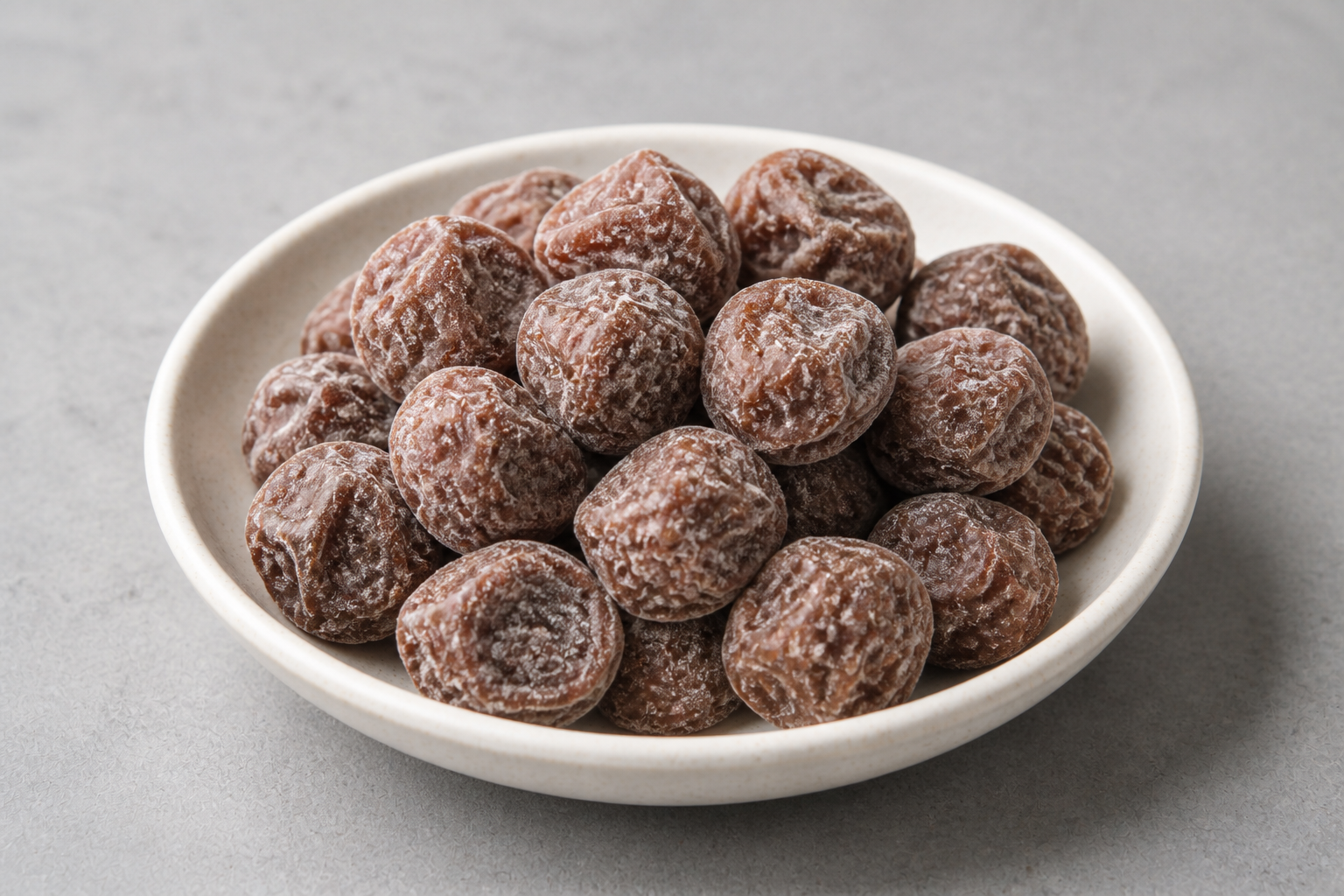
| Product | Salted Dried Plums, a fully dried salted-plum ingredient for further processing and formulation trials |
| Ingredient specification | Compare piece size, dryness and salt requirements against samples and product documents; record the condition of the packed ingredient |
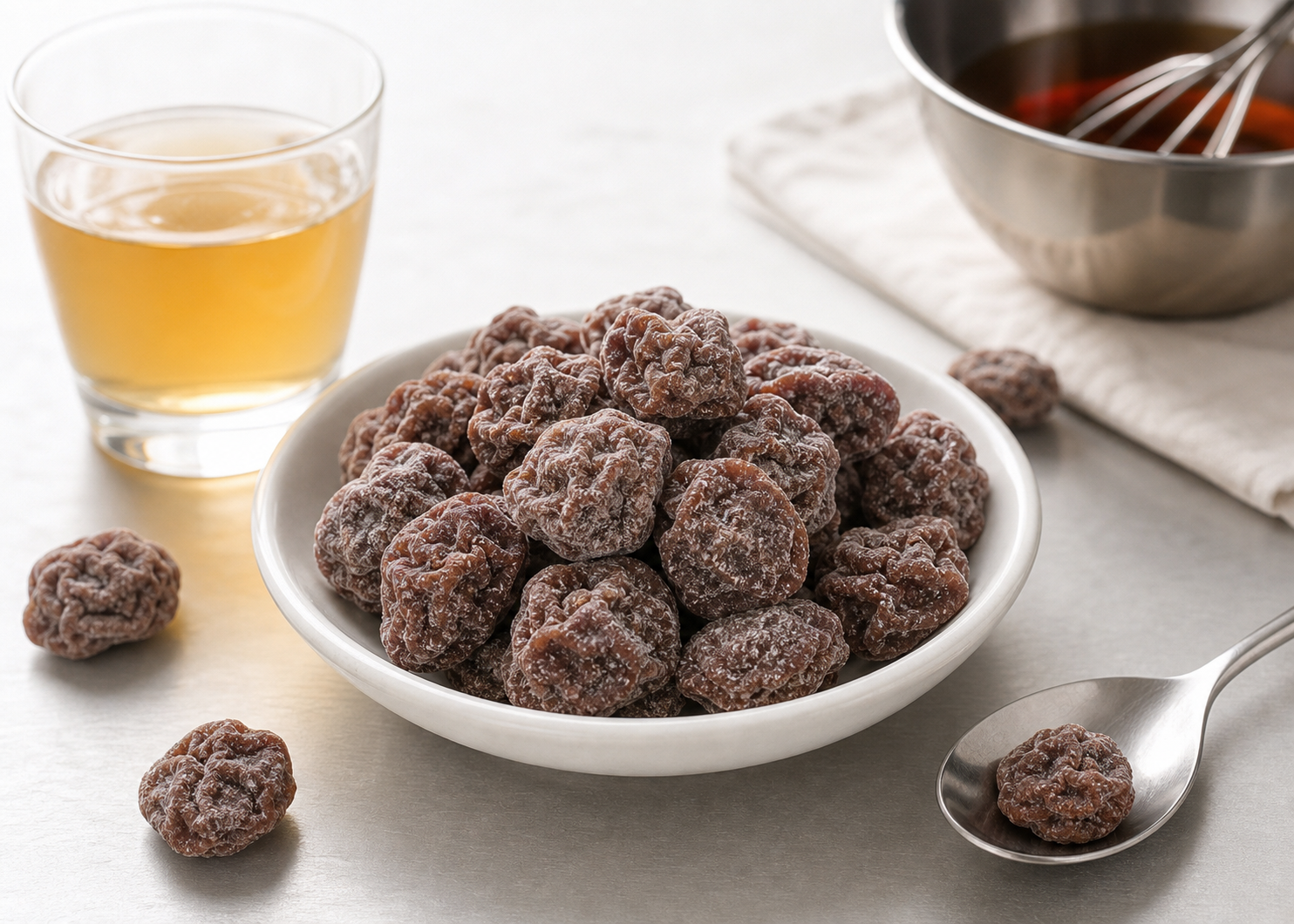
| Application directions | Food processing, seasonings, sauce development, beverage and foodservice trials, assessed against the buyer's product and operating requirements |
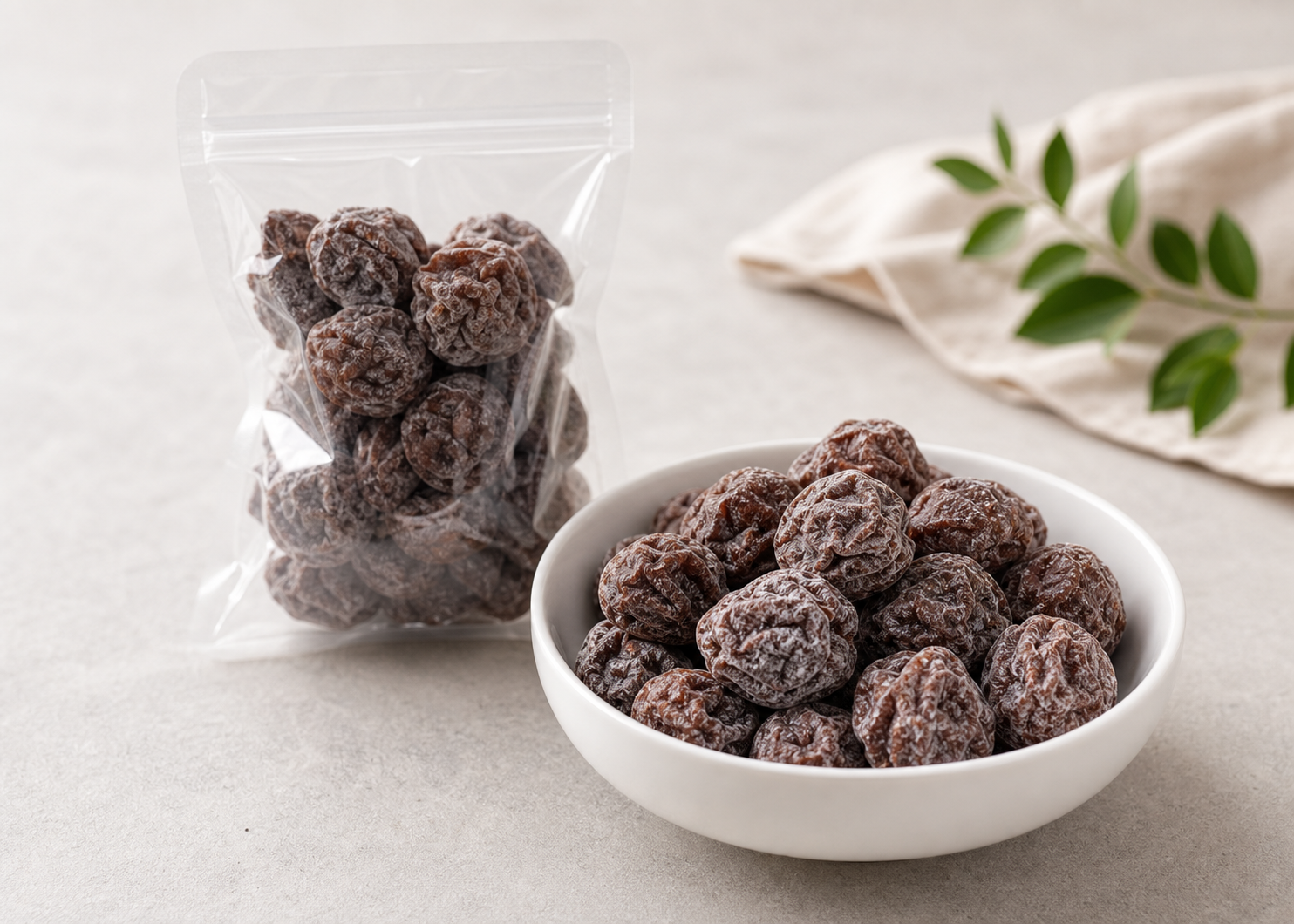
| Packing and purchasing | Confirm net weight, inner packs, carton requirements, label language, batch identification, MOQ and required arrival schedule |
| Ingredients and documents | Made with plums and salt. Confirm the complete ingredient declaration, additives and labeling information against the selected product's supply documents. |
| Pits and preparation | Confirm pit condition and suitable processing requirements when requesting samples. Establish appropriate pit handling and equipment suitability before cutting, grinding or blending. |
Turn sample results into a purchasing specification
Before requesting samples, prepare an existing ingredient specification, a target finished product or a short flavor brief. Identify the point that matters most, such as salt intensity in the finished recipe, recognizable plum flavor or ease of weighing. Keep the product name, sample reference and trial notes together so purchasing and development teams compare the same material. For numerical salt or moisture requirements, agree the test item, method and available documentation.
Compare candidate samples under consistent recipe conditions and record the amount used, preparation method and finished result. Moving from a small trial to production also requires assessment of equipment, batch size and handling. Sample results support selection; the buyer's development and food-safety procedures must establish the conditions for production. This makes the next discussion about a measurable requirement rather than a general preference.
Foodservice and distribution buyers can add expected daily usage, opening frequency and storage space to the packing brief. Central kitchens and individual sites may need different pack sizes. Compare bulk and smaller-pack options around those workflows, including packaging cost and stock held at each location. Agree receiving checks for product identity, batch, pack integrity, net weight and the specified ingredient condition, and retain those details for repeat orders.
Ingredient information, handling and storage
Plums and salt are the ingredient basis for Salted Dried Plums. Request the selected product's complete ingredient declaration when discussing samples, especially where the finished food has ingredient restrictions, allergen-labeling needs or export requirements. Label information, nutrition data and raw-material origin documents should correspond to the product you actually order.
Discuss preparation in relation to your equipment, formulation and finished product. Before cutting, grinding or blending, confirm pit condition and appropriate handling against the selected specification. Where extraction or heating is proposed, trials should establish suitable conditions and the resulting product characteristics. Keep the method and observations with the sample reference so later comparisons remain useful.
Confirm storage conditions, unopened shelf life and handling after opening before ordering, using documents applicable to the selected product and pack. Plan stock rotation and daily use around those requirements. If a pack arrives damaged, damp or otherwise outside the agreed condition, hold it from use and contact the supplier for assessment.
Prepare a useful quotation request
Organize your request around use, volume and packing. Describe the food you intend to make and your processing approach, provide trial and repeat-order estimates, then specify pack capacity, label language and destination. Include preferred sample and arrival dates where there is a planned trial or launch, so sample arrangements, pricing and supply can be considered together.
B2B PROCESS
From application brief to scheduled supply

Match purchasing decisions to product documents
Read inspection reports alongside the product specification. Check the tested product, date, test items and scope, then ask Fullten which records apply to your proposed order. Where customers require particular tests or import documents, share the list early so the available information and any additional arrangements can be clarified.
Salted Dried Plums: buyer questions
Is this a processing ingredient or a ready-to-eat snack?
This item is supplied as a fully dried salted-plum ingredient for further processing, with seasoning, sauce and beverage development as trial directions. If you plan to repack it for direct consumption, first confirm the selected specification's intended use and required preparation with Fullten, together with the applicable product and labeling requirements.
How do I confirm whether the supplied product contains pits?
State your pit-format requirements when requesting samples so Fullten can confirm available specifications. Before chopping, blending or grinding, check the sample and supply documents, and establish appropriate pit handling and equipment suitability.
How can I request samples and compare salt level and dryness?
Provide the application, target flavor and quantity needed for testing, then confirm sample and shipping terms. Check numerical specifications against agreed documentation and test methods. Compare flavor in properly prepared trial products, recording the amount used and the result to guide selection.
How should I plan a beverage, sauce or foodservice trial?
Start with the intended finished result and your current operating method. Use a small trial to assess flavor, texture and handling. Whether soaking, extraction or heating is appropriate depends on the selected ingredient and your process; a sample trial does not itself validate a production food-safety procedure.
How are bulk MOQ and lead time confirmed?
Provide the ingredient specification, net weight per pack, initial order estimate and expected repeat volume. Fullten can then confirm MOQ and timing against product availability, packaging and scheduling. For staged arrivals, list the quantity and preferred date for each shipment.
Can we discuss a custom formulation or OEM/ODM packaging?
Share the desired flavor changes, ingredient restrictions and pack format so Fullten can assess a workable option. For buyer-supplied packaging, include dimensions, materials and labeling requirements. Formula or pack changes may require renewed sample review, pricing and minimum-order confirmation.
Which documents should I request for purchasing or export?
Ask about ingredient declarations, specifications, allergen information, applicable inspection reports and raw-material origin documents. Export buyers should also provide the destination and customer requirements so Fullten can confirm the relevant products, available records and arrangements for any further information.
How do I confirm shelf life and handling after opening?
Use the selected specification, actual pack and batch documents, and ask about both unopened storage and handling after opening. Sharing expected usage and warehouse conditions helps the packing and replenishment plan fit your operation.
Related plum ingredients
Discuss samples and pricing with Fullten
Bring your current recipe brief or purchasing specification to Fullten. Share the application, volume, pack requirements and preferred schedule to begin a sample and quotation discussion. If you are still comparing ingredients, describe the flavor or handling issue you need to resolve so the conversation starts with a practical selection goal.
Contact Fullten about Salted Dried Plums

